
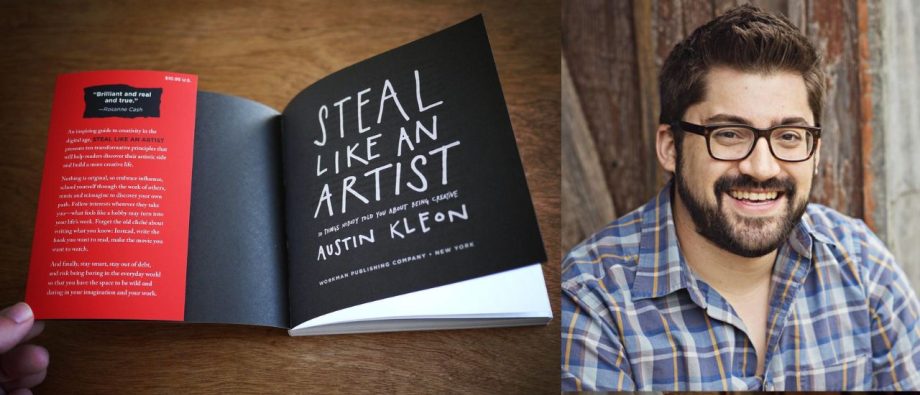
Art & Craft News explores creative inspiration for artists through Austin Kleon’s book Steal Like an Artist, a work that challenges one of the most persistent pressures in contemporary creative culture: the belief that every idea must be completely original. For artists, designers, illustrators, doll makers, jewelry creators, and other makers, this expectation can become a source of anxiety rather than motivation. The article examines how the pursuit of absolute originality can distort the creative process, turning natural influence into something to fear and making artists question whether an idea is “unique enough” before it has even had the chance to develop. Kleon’s central argument offers a different perspective: no creative work appears in isolation. Every project grows out of images, books, memories, conversations, cultural references, and previous works encountered over time. Creativity therefore becomes less about inventing from nothing and more about transforming what has already shaped the artist.
The article emphasizes that this idea is especially relevant in handmade communities, where questions of inspiration, influence, and borrowing can quickly become emotionally charged. Makers often encounter moments when a new design reminds them of something they have seen before, raising doubts about whether they are repeating another artist’s path. Steal Like an Artist reframes that concern by presenting art as an ongoing conversation between generations and disciplines. A creator absorbs references, combines them with personal experience, changes them through technique and taste, and eventually produces something that carries a different context and meaning. Creative inspiration for artists is therefore not presented as a shortcut or permission to copy someone else’s work directly. Instead, the article focuses on the broader reality that cultural influence is unavoidable and that developing an individual voice depends on how those influences are selected, interpreted, combined, and transformed.
Read the full article in Art & Craft News to explore why Kleon’s ideas can help reduce the pressure to be original at all costs and encourage a more realistic understanding of the creative process. For independent artists and makers, this approach can also support long-term creative development. Instead of constantly searching for an idea that has never existed before, it may be more useful to study the themes, techniques, artists, materials, and visual traditions that genuinely hold attention. Over time, those influences begin to interact with personal experience, technical choices, and recurring interests, gradually forming a recognizable creative language. A maker’s identity does not emerge because no one has ever used a similar material or subject. It develops because the combination of references, decisions, and perspective becomes increasingly specific to that person.
Crealandia brings together independent artists, designers, and makers working across handmade products, art, digital products, patterns, tutorials, dolls, toys, miniatures, collectibles, craft supplies, and other creative disciplines. For creators building an independent practice, presenting work online can become part of the same process of developing a recognizable voice. Collections, recurring themes, favorite materials, and consistent visual choices can reveal how inspiration has been transformed into an individual body of work. This is especially important in creative fields where many artists may work with similar techniques but still produce very different results through personal interpretation. Makers who want to explore independent creative work, discover different artistic approaches, and develop their own presence can visit Crealandia and explore the international marketplace.