
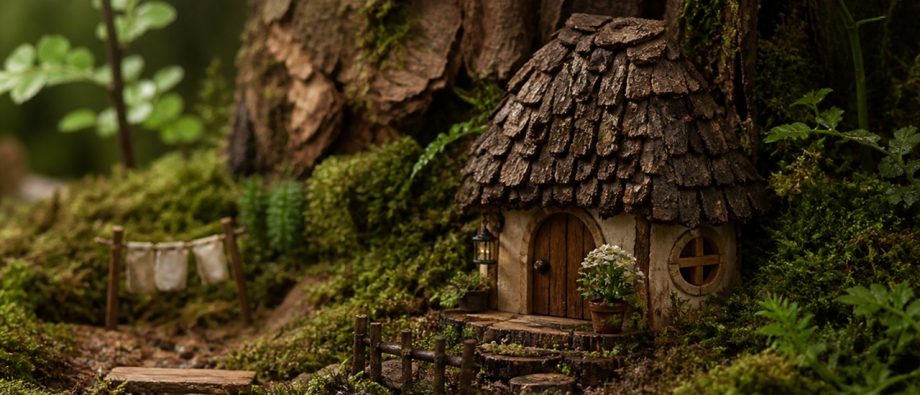
Art & Craft News explores natural materials in handmade as a creative approach in which the maker does not simply impose a predetermined form on wood, wool, clay, moss, or branches, but learns to observe what the material already suggests. Artists often search for inspiration in references, trends, and other people’s work, yet nature itself can become the starting point. A crack in wood, an unexpected change in wool color, or the curve of a branch may already contain the beginning of an idea. Working this way changes the creative question from “What should I make?” to “What is already here?” Instead of immediately cutting, polishing, straightening, or correcting a material, the maker pauses, turns it in the hands, studies it from different angles, and allows its irregularities to suggest direction. Natural materials in handmade therefore become more than raw supplies: they participate in shaping the object, influencing composition, texture, movement, and character.
The article looks at this principle through several different materials. With wood, beginners may instinctively try to remove irregularities, but a crack, bend, or uneven edge can become one of the strongest elements of a finished piece. In miniature work, moss, twigs, and other natural elements often look more convincing when they are arranged with less symmetry. Real forest scenes are irregular, so makers can first place components loosely, move them repeatedly, and wait until the composition begins to feel natural before fixing anything permanently. Wool requires another kind of attention. In felting and textile work, forcing fibers too quickly can create a dense but visually flat surface, while slower layering allows texture and unexpected transitions to remain visible. These apparent imperfections may produce depth that would be difficult to design deliberately. Across these examples, the practical lesson is similar: observation comes before control, and the material is allowed to contribute something that was not fully planned in advance.
Clay introduces yet another aspect of this relationship because part of the process continues beyond the artist’s hands. Firing can alter color, surface, and form, reminding the maker that complete predictability is not always possible. Experienced ceramic artists may therefore leave room for change rather than insisting on absolute precision. Slightly irregular forms, unexpected color variations, or small surface changes can become part of the finished work instead of automatically being treated as defects. Read the complete story in Art & Craft News to explore how wood, wool, clay, moss, and other natural materials can influence both creative decisions and the final character of handmade objects. The article encourages makers to slow down, study materials more closely, and recognize the possibilities already contained within them. For independent artists, this approach can also help develop a more distinctive creative language because the finished work emerges through a dialogue between personal intention and the unique qualities of each material rather than through repetition of a fixed visual formula.
Crealandia brings together independent artists and makers working with wood, textiles, felting, ceramics, miniatures, handmade decor, craft supplies, patterns, tutorials, collectibles, and many other creative disciplines. For creators who work with natural materials in handmade, the individuality of each piece can begin with the material itself: no two pieces of wood have exactly the same grain, wool fibers behave differently in the hands, and clay can respond unpredictably during firing. These variations give makers opportunities to create objects in which texture, irregularity, and process remain visible rather than being hidden. Presenting such work together with information about materials and creative methods can help audiences better understand why handmade objects often differ from standardized production. Crealandia provides a marketplace where artists can present these individual approaches alongside other forms of independent art and craft. Visit Crealandia to explore handmade work, natural-material crafts, creative supplies, and projects by independent makers.