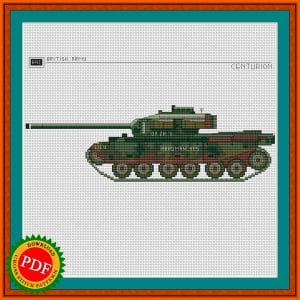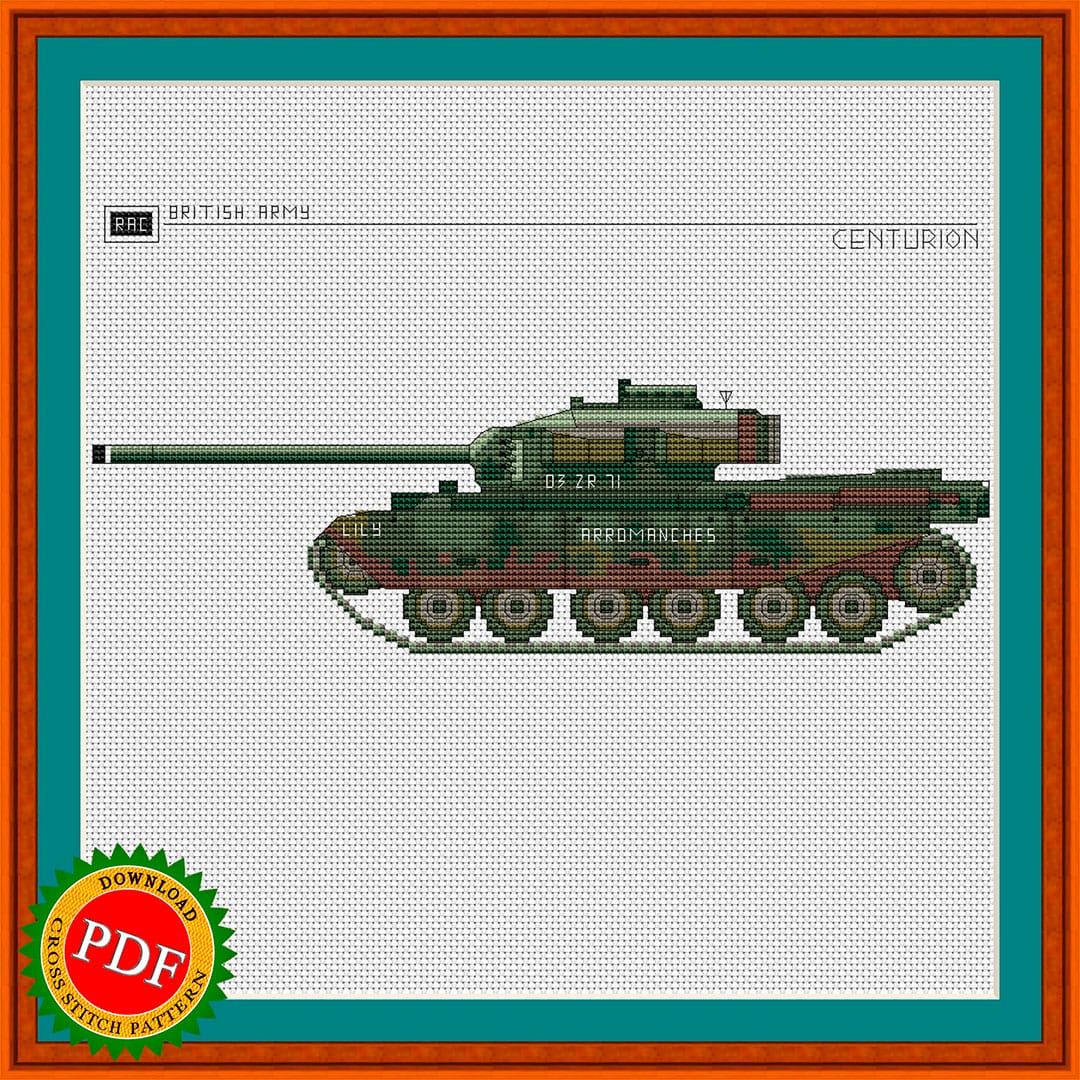
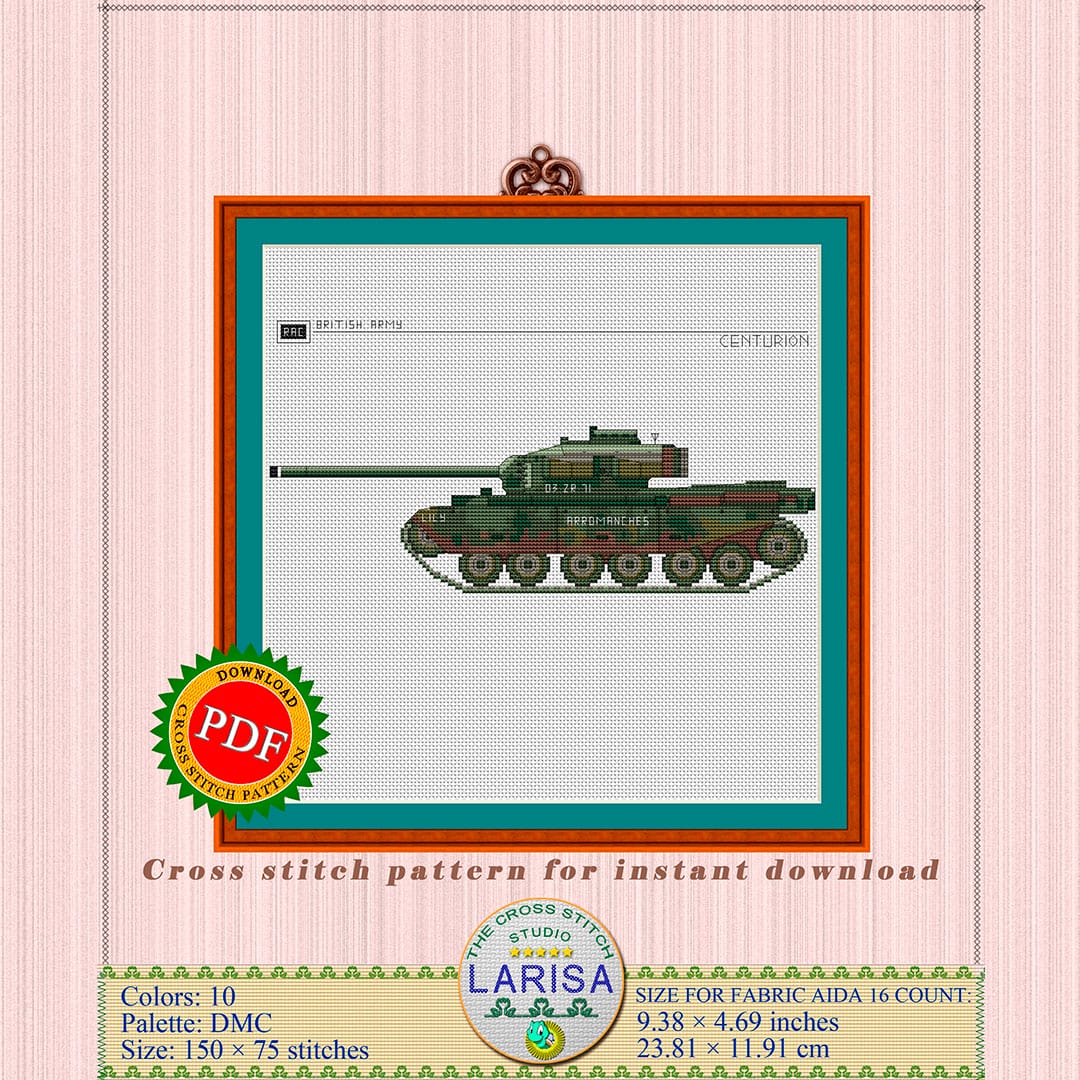
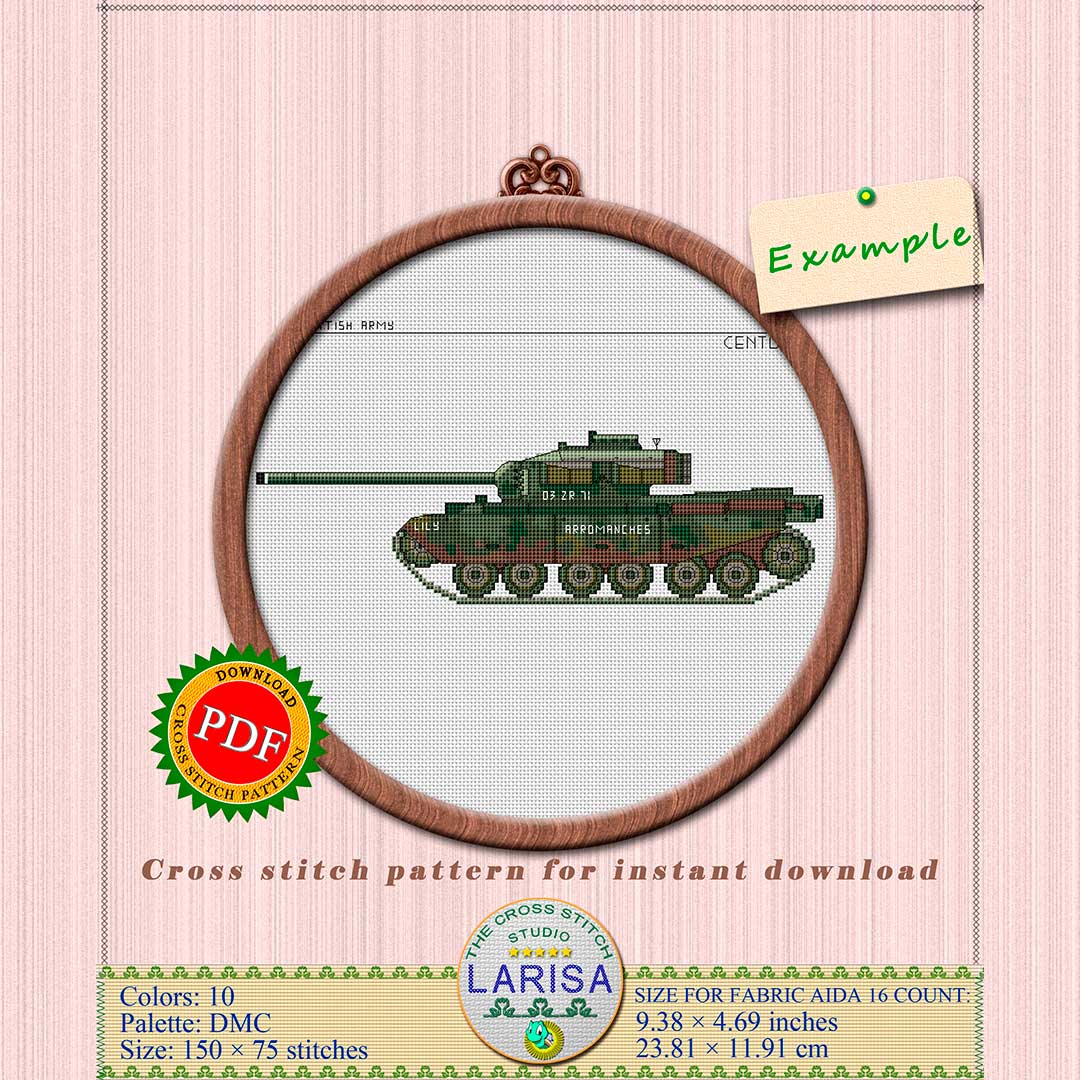
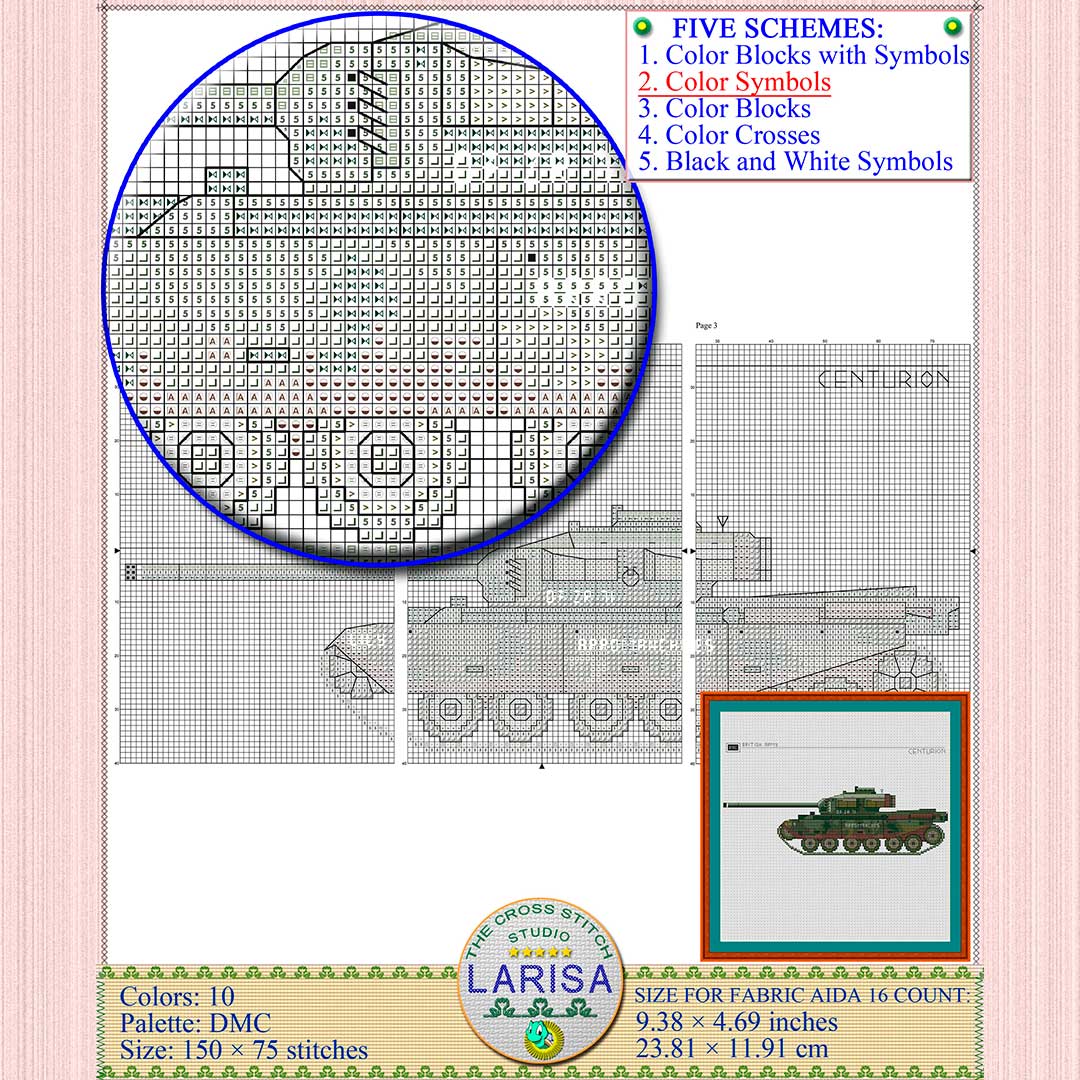
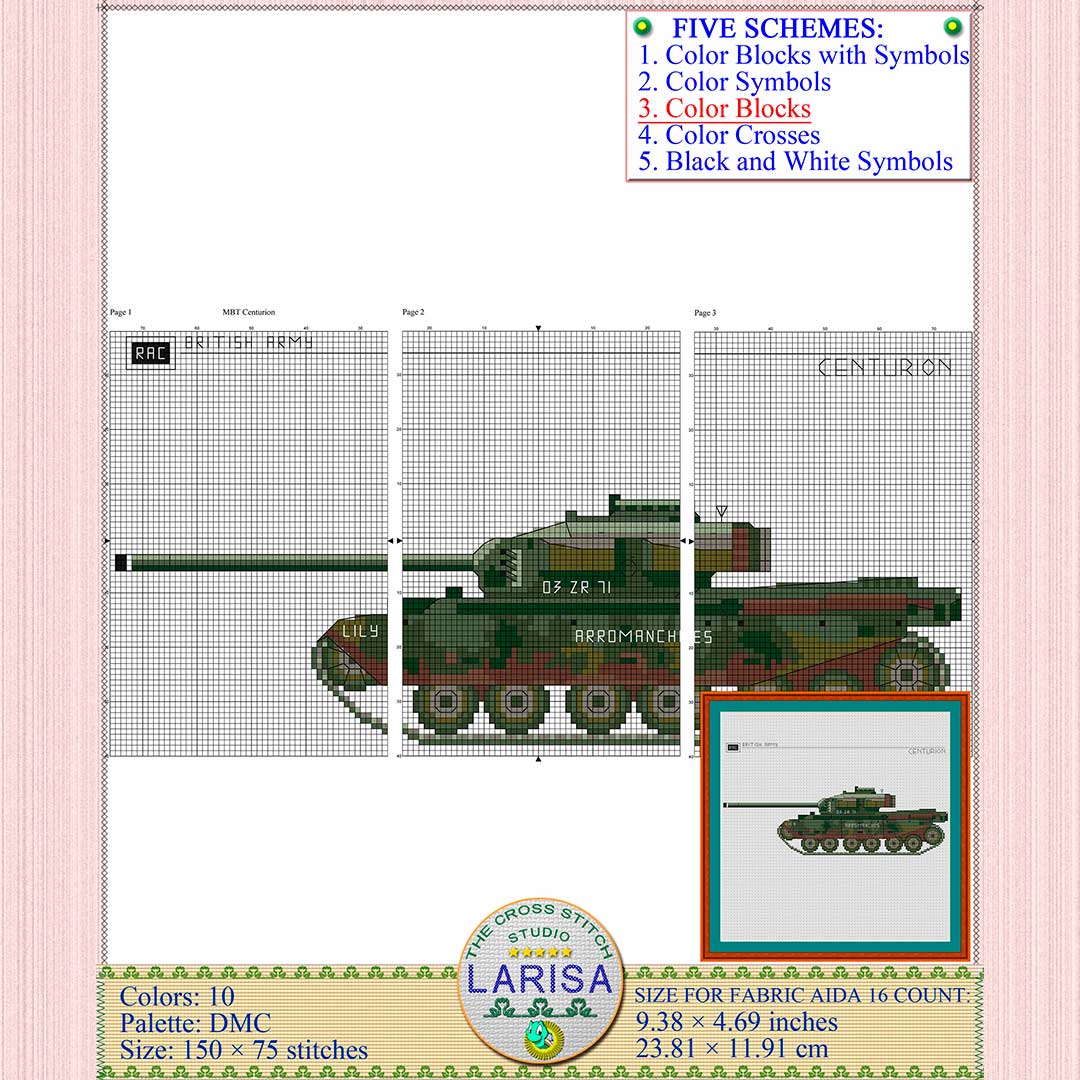
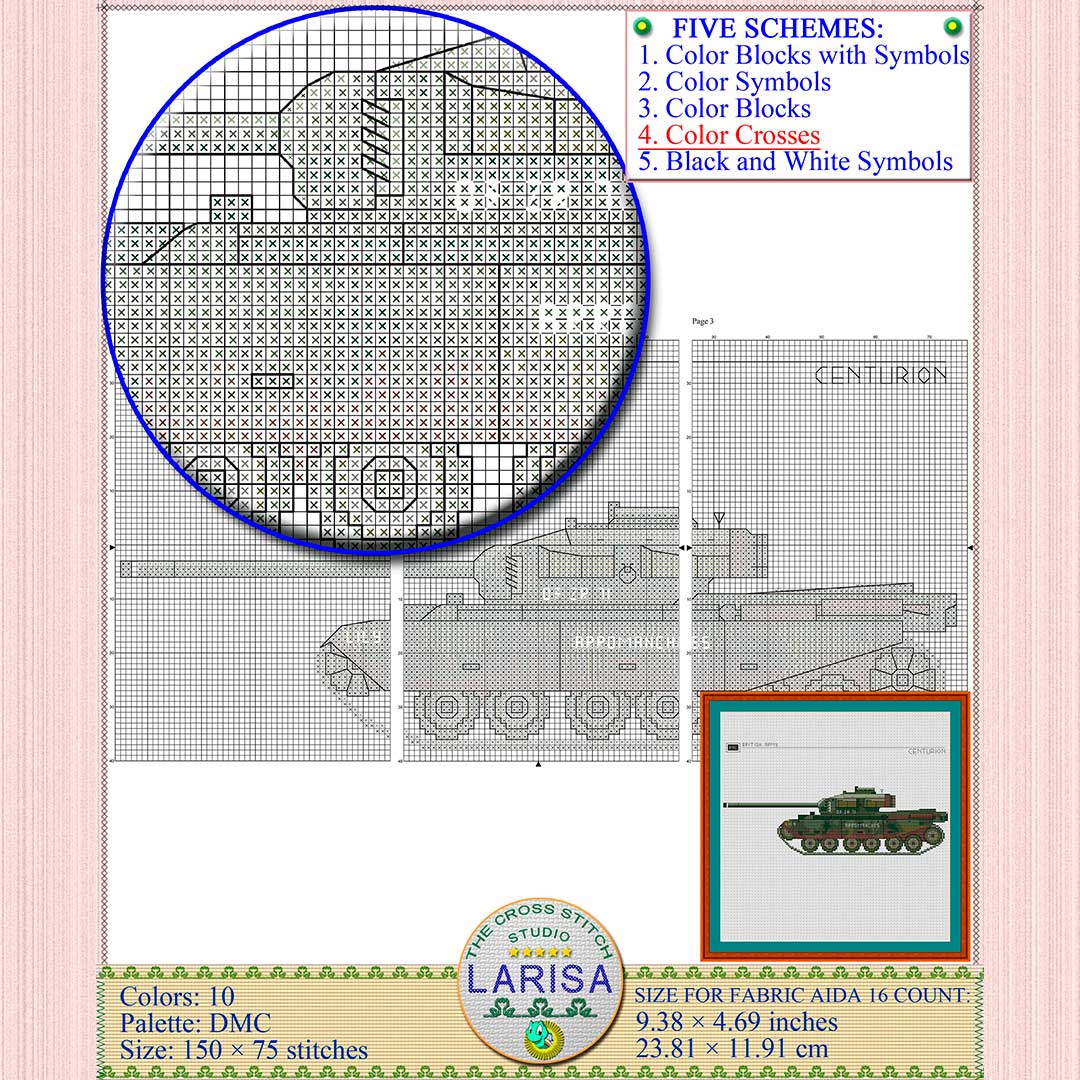
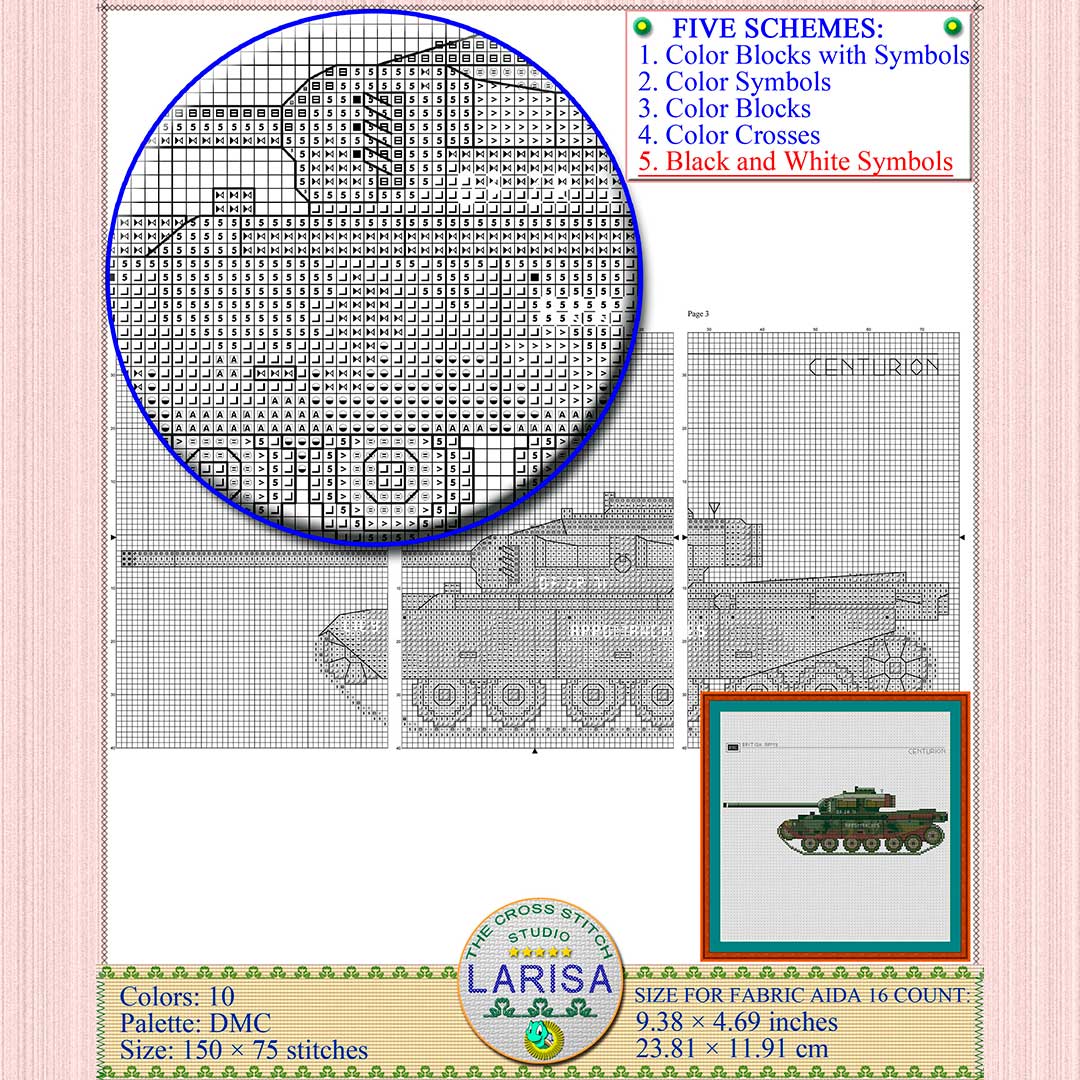
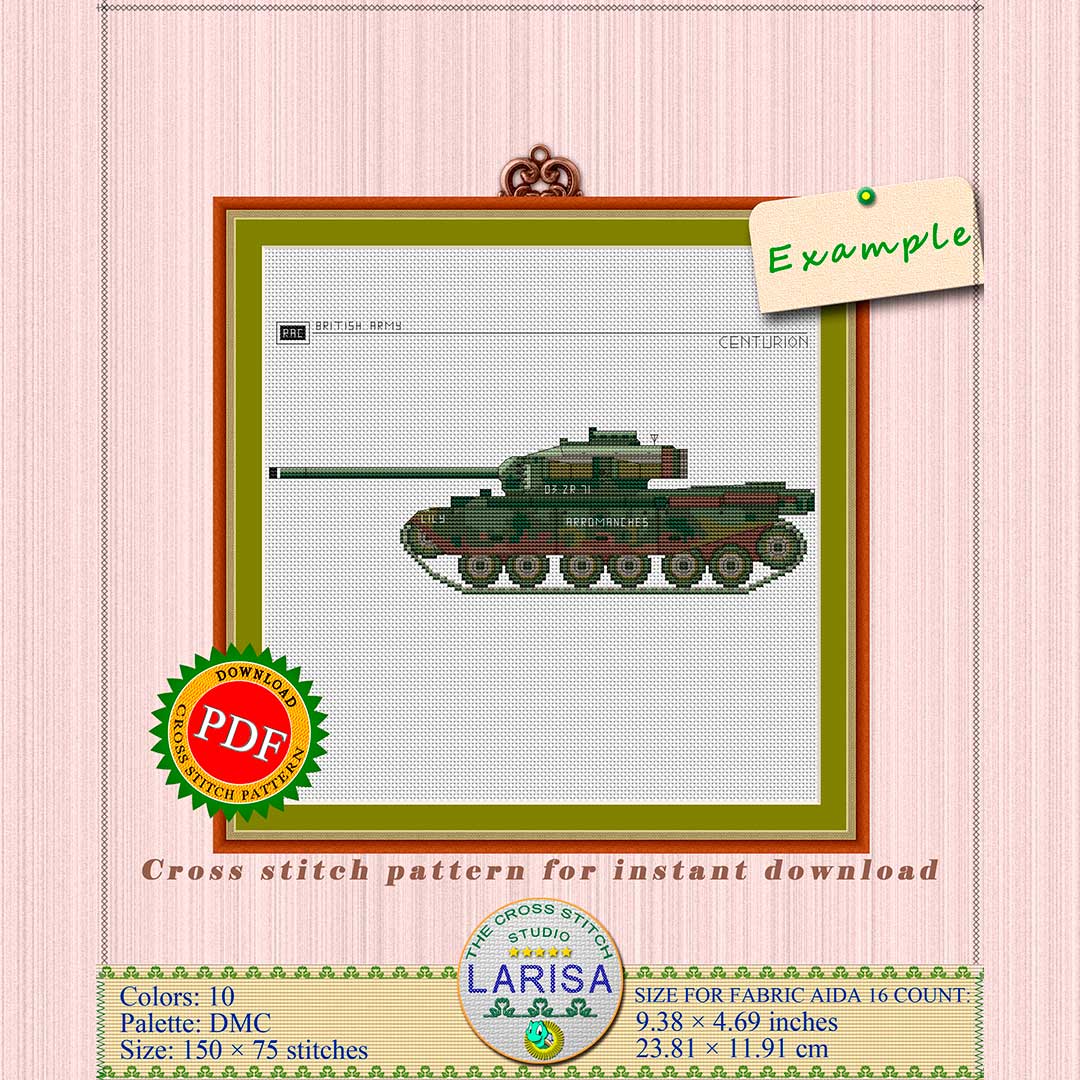

The Centurion Mk.3 “Arromanches”, also known as “Lily”, was a British tank that served in the Korean War. It was named after the Battle of Arromanches, which was a major amphibious landing operation that took place in Normandy on D-Day, June 6, 1944.
– Only digital format. The cross stitch pattern comes in .PDF format.
Specification of this cross-stitch pattern for different types of fabric
– Fabric: Aida.
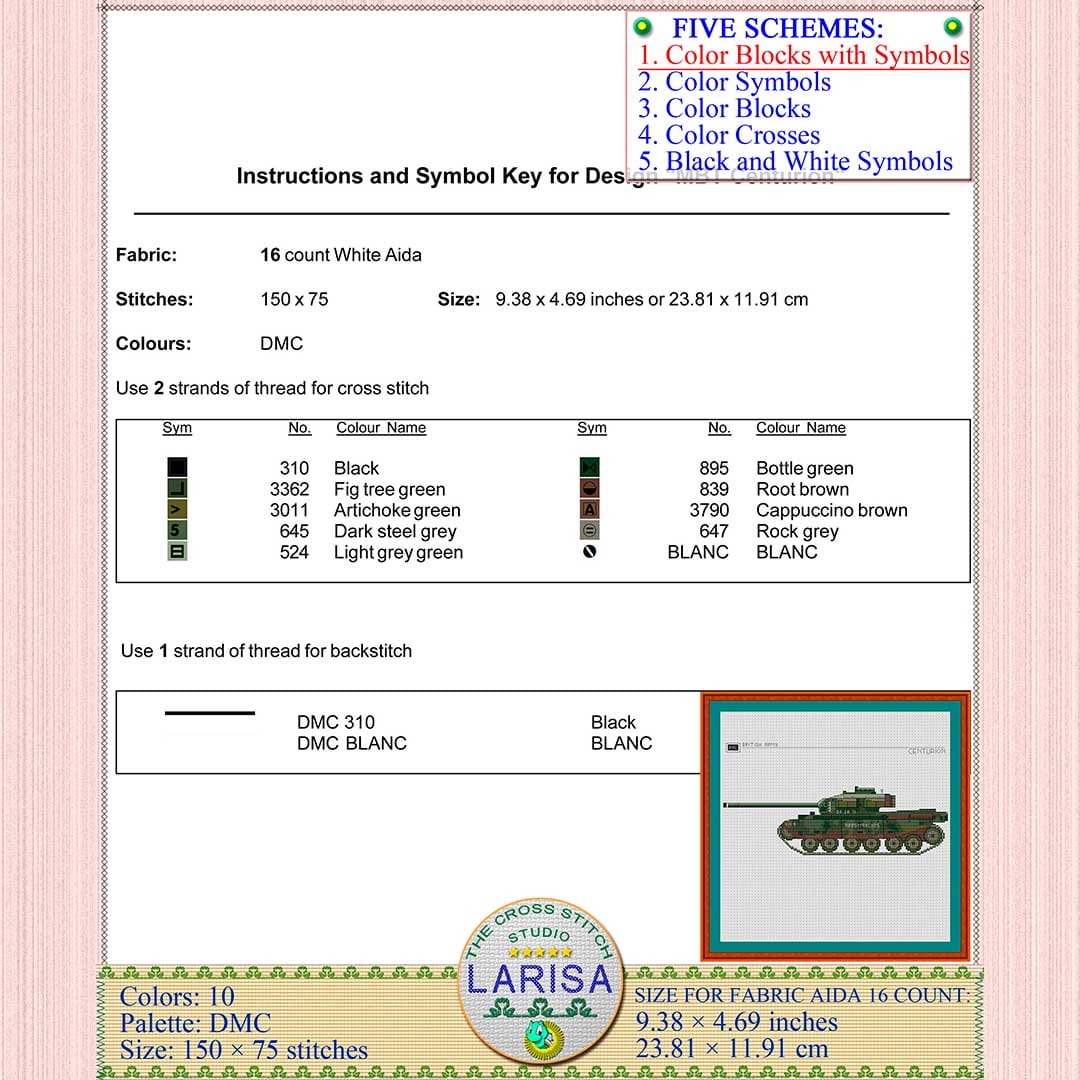
– Colors: 10. Palette: DMC.
– Size: 150 x 75 stitches.
Finished size will vary depending on the count fabric/canvas you choose.
– 14 count – Size: 10.71 x 5.36 inches | 27.2 x 13.61 cm
– 16 count – Size: 9.38 x 4.69 inches | 23.81 x 11.91 cm
– 18 count – Size: 8.33 x 4.17 inches | 21.16 x 10.59 cm
5 PDF includes:
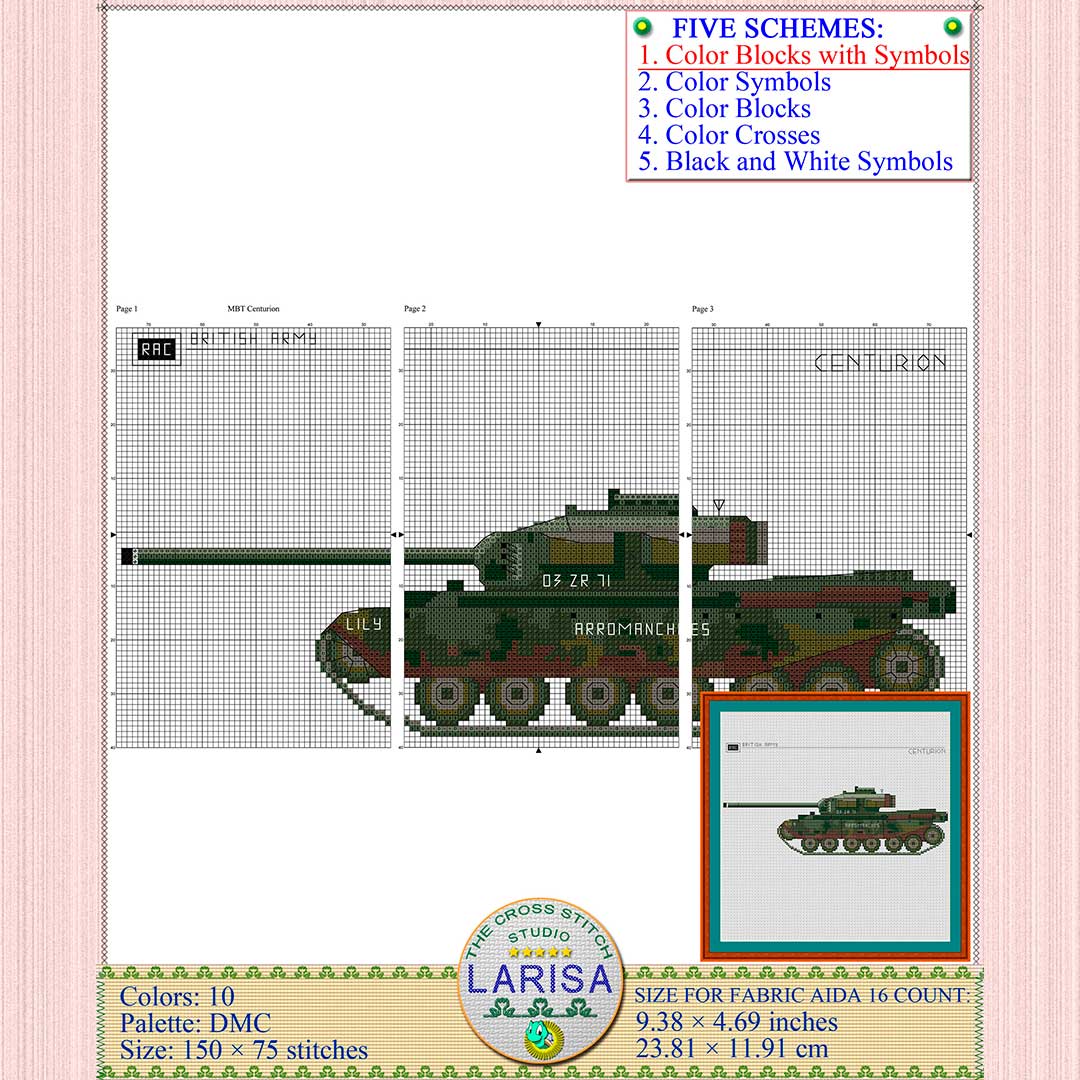
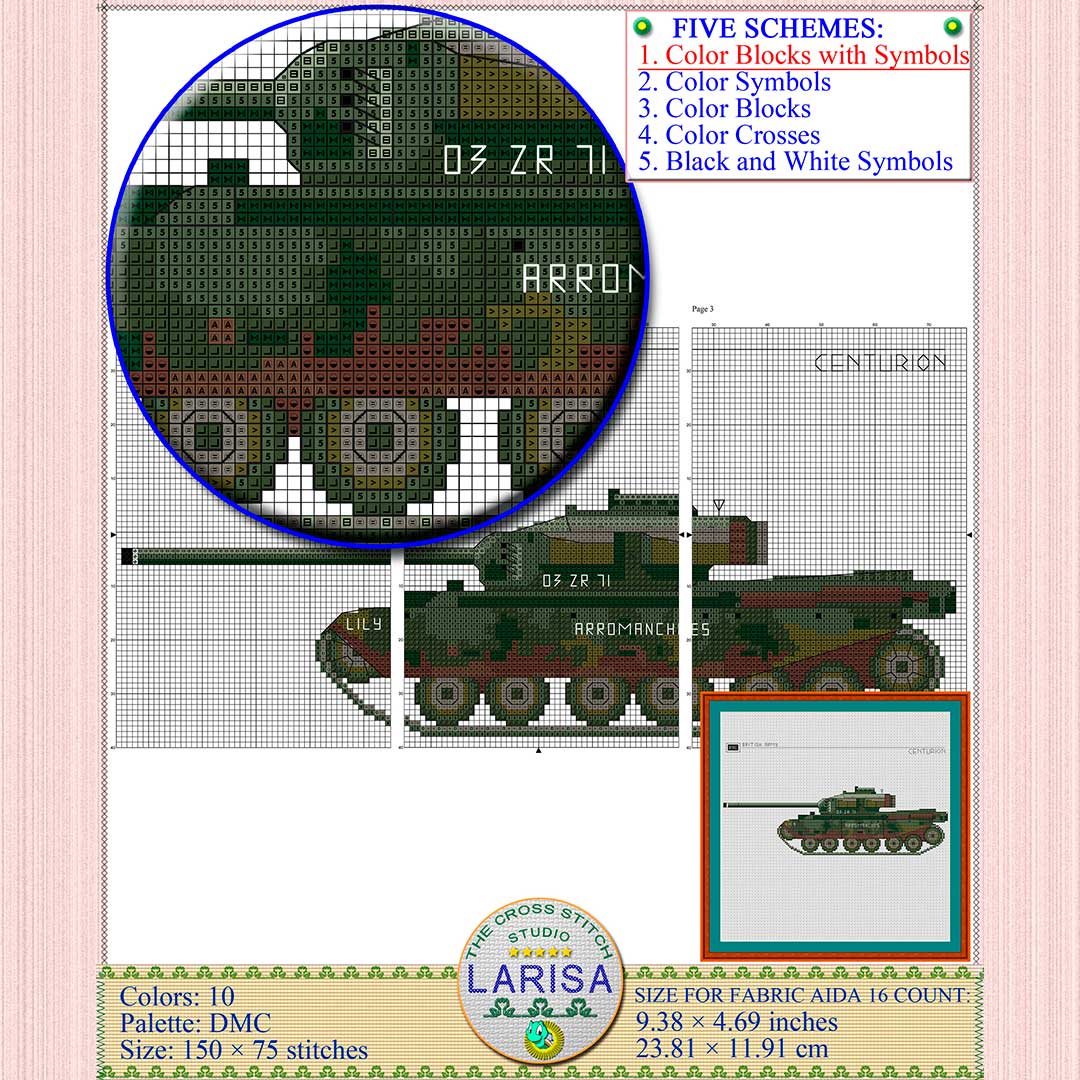
1. FIVE SCHEMES:
– Color Blocks with Symbols.
– Color Symbols.
– Color Blocks.
– Color Crosses.
– Black and White Symbols.
2. Color photo for reference.
3. List of DMC thread colors (instruction and key section).
Embark on a stitching journey with our Centurion Tank Cross Stitch Pattern. This pattern showcases the iconic British MBT Centurion Mk 3 ‘Arromanches’ in all its glory. Discover the art of cross-stitching as you bring this historic tank to life. Stitch your way through history and create a masterpiece with our British Tank Centurion Chart.
xxxxxx
– Please note this is a digital pattern only! No fabric, floss, or other materials are included in the listing.
– Returns & exchanges. This is a digital product and I don’t accept returns, exchanges, or cancellations.
– Feel free to contact me if you have any further questions.
xxxxxx
Reference Information.
– The Centurion was the primary British Army main battle tank of the post-World War II period. Introduced in 1945, it is widely considered to be one of the most successful post-war tank designs, remaining in production into the 1960s, and seeing combat into the 1980s.
– Centurion Mk 3. Upgunned to the 20pdr (84 mm) gun, slightly shorter hull, 2 stowage positions for track links on glacis, vehicle weight 49 tons. Fitted with a two-inch (51 mm) mortar, loaded and fired from within the turret. Entered full production in 1948, replaced earlier variants.