
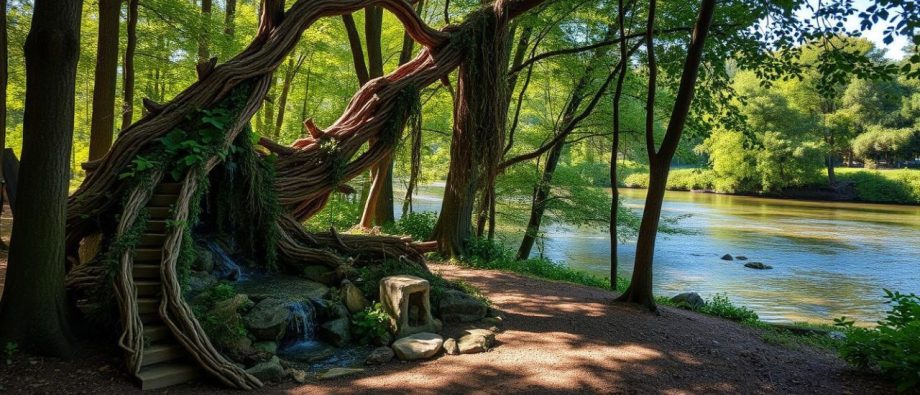
Art & Craft News explores nature inspired sculpture through an idea that challenges the familiar notion of an artwork as something complete and fixed at the moment the artist puts down a tool. In this approach, the life of a sculpture may truly begin only after it leaves the studio and enters an environment that the artist can no longer fully control. Wind, rain, sunlight, salt, moss, and the slow passage of time become active participants in the work, changing surfaces, movement, color, and texture. Nature inspired sculpture therefore exists not only as an object but as an evolving process. Instead of treating weather and aging exclusively as forces of destruction, some artists allow them to continue shaping the work, adding layers that could never have been produced in the studio alone.
The article considers how different natural forces gradually transform materials and alter the way a sculpture is perceived. Wind can animate metal elements, turning a static construction into a responsive system. Rain begins the long process through which surfaces change and patina develops. Sea salt can affect stone, while changing daylight continuously redraws shadows across a form. Moss and lichens may slowly become part of the sculpture itself, connecting it more closely with the surrounding landscape. This way of thinking is not limited to contemporary art. Ancient stone sculptures that have remained outdoors for centuries demonstrate how erosion, cracks, softened lines, and traces of water can become part of an object’s visual history. What may appear to a conservator as evidence of aging can also be understood artistically as the continuation of a process initiated by the original maker. Time becomes an invisible tool that keeps working after human hands have stopped.
Bronze offers one of the clearest examples of this dialogue between artistic intention and natural transformation. A freshly cast bronze surface may initially possess a warm metallic character, yet exposure gradually alters its appearance. Darker areas emerge, richer brown tones develop, and eventually the familiar greenish patina associated with aged bronze can appear. The transformation is more than a simple change of color: it creates another visual state of the work and introduces an aesthetic that did not exist when the sculpture first left the artist’s hands. Read the full article in Art & Craft News to explore how weather, materials, landscape, and time can participate in the making of art. For contemporary artists and makers, the subject also raises a broader creative question: whether a work must always resist change, or whether change itself can become part of its concept, identity, and continuing story.
Crealandia brings together independent artists, designers, and makers working with sculpture, handmade objects, art, craft supplies, digital products, patterns, tutorials, collectibles, and other creative forms. For artists interested in material, texture, natural processes, and the relationship between objects and their environments, nature inspired sculpture offers a compelling example of how artistic ideas can extend beyond the moment of production. The concept is relevant not only to monumental outdoor work but also to makers who think carefully about how wood, metal, stone, clay, textiles, and other materials develop character through use, exposure, and time. Presenting creative work alongside its process, materials, and artistic concept can help viewers understand the thinking behind an object rather than seeing only its final appearance. Crealandia provides a space where independent creators can present such distinctive approaches across many artistic disciplines and connect them with audiences interested in original creative work. Visit Crealandia to explore artists, handmade objects, and contemporary creative practices.